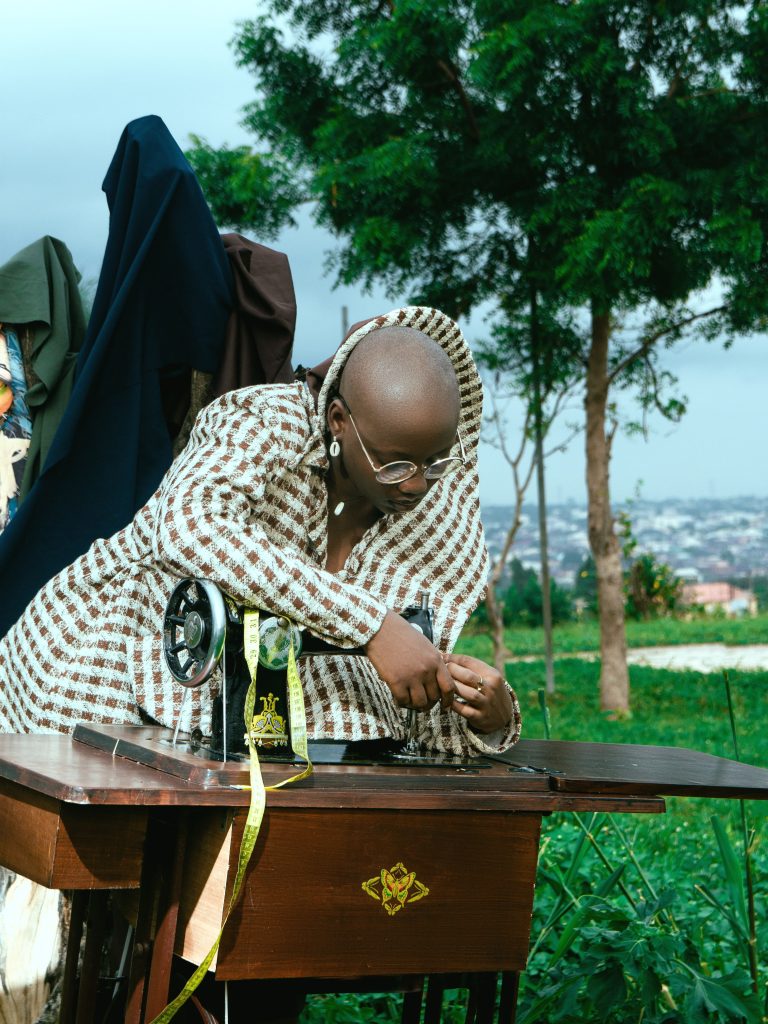
African tailoring is entering one of its most interesting periods.
For generations, the conversation around African clothing was often divided into two simple categories.
There was traditional clothing.
And there was Western formalwear.
But the modern African professional increasingly exists somewhere beyond that binary.
A Kenyan executive may wear a sharply tailored navy suit to a board meeting, a Kaunda suit to a formal event, an Ankara-accented blazer to a creative industry gathering and a carefully constructed African outfit to a wedding.
These choices are not contradictory.
They reflect a modern African identity that is increasingly comfortable drawing from multiple design traditions at once.
The future of African tailoring is not about choosing between heritage and modernity.
It is about understanding how the two can be constructed together.
The Modern African Professional Is Changing the Conversation
Africa’s professional class is becoming increasingly diverse.
Executives, entrepreneurs, creatives, public figures and business leaders are working across industries and international markets while remaining deeply connected to local culture.
This is influencing how people dress.
The modern African professional may want:
- The precision of bespoke Western tailoring
- The identity of African fabrics
- The silhouette of a traditional garment
- The versatility of contemporary fashion
- The quality associated with luxury clothing
These desires do not have to be separated.
A tailored blazer can contain an Ankara lining.
A Kaunda suit can be cut with the precision of a contemporary bespoke suit.
A wedding suit can incorporate African fabric without becoming costume-like.
This is where the future of African tailoring becomes particularly interesting.
African Fabrics Are Becoming Design Language
Ankara, kitenge and other African textiles are increasingly being treated as more than decorative fabrics.
They are becoming part of a broader design language.
Their:
- Colour
- Pattern
- Texture
- Symbolism
- Visual energy
can be used deliberately within contemporary garments.
Ankara may appear as:
- A jacket lining
- A lapel detail
- A pocket accent
- A waistcoat
- A full tailored garment
- A contrast panel
The important shift is not simply that African fabrics are appearing in more clothes.
The deeper change is that they are increasingly being used within garments constructed with serious tailoring discipline.
The fabric is no longer treated as something separate from formal fashion.
It becomes part of the architecture of the garment.
The Kaunda Suit Is a Case Study in African Fashion Evolution
The modern evolution of the Kaunda suit illustrates this change particularly well.
The original garment became associated with African political leadership and cultural independence.
Its silhouette was distinct from conventional Western suiting.
Today, modern tailors are reinterpreting the garment through contemporary techniques.
The result can include:
- Sharper shoulder construction
- More precise waist shaping
- Modern fabrics
- Contemporary proportions
- Refined collar design
The garment remains recognisably a Kaunda suit.
But it is no longer confined to historical interpretation.
It can now exist comfortably in:
- Boardrooms
- Graduations
- Weddings
- Formal events
- Public life
This is the broader pattern occurring across African tailoring.
Heritage garments are not disappearing.
They are being redesigned for the lives people live now.
African Tailoring Is Not Only Traditional Clothing
One of the most limiting ideas about African tailoring is that it refers only to traditional or ceremonial garments.
That definition is too narrow.
African tailoring can include:
- Executive suits
- Wedding suits
- Tuxedos
- Ladies’ executive wear
- Bespoke jackets
- African formalwear
- Kaunda suits
- Ankara garments
- Contemporary fusion pieces
The common element is not necessarily the silhouette or fabric.
It is the relationship between the garment and the context in which it is created.
A tailoring house can create a conventional Western suit for an African client while still operating within a distinctly African fashion environment.
The geography of the tailor, the climate, the client’s lifestyle, the available fabrics and the cultural context all influence the final garment.
African tailoring should therefore be understood as a living category rather than a fixed costume tradition.
The Rise of Identity-Driven Clothing
For many clients, clothing is no longer simply about looking expensive.
It is about looking specific.
A generic suit may communicate professionalism.
But a carefully designed garment can communicate something more personal:
- Where someone comes from
- What they value
- How they see themselves
- What kind of professional they want to be
- Which traditions they want to carry forward
This is why custom tailoring is becoming increasingly important.
A standard garment asks the wearer to adapt to the design.
Bespoke tailoring allows the design to respond to the wearer.
That creates more room for identity.
African Tailoring and Luxury
The global luxury fashion industry has increasingly demonstrated the value of cultural specificity.
The most memorable fashion is rarely completely generic.
It has a point of view.
African tailoring has an enormous amount of cultural and design material to work with:
- Textile traditions
- Distinctive silhouettes
- Colour systems
- Craft techniques
- Regional identities
- Historical garments
The opportunity is not to copy international luxury fashion.
It is to develop a luxury language that is genuinely African while meeting high standards of construction and design.
Luxury is not simply a price tag.
It is also:
- Time
- Precision
- Craftsmanship
- Individualisation
- Materials
- Experience
These are principles that have always been central to bespoke tailoring.
The Nairobi Opportunity
Nairobi occupies an interesting position within the evolution of African tailoring.
The city combines:
- A large professional class
- International business connections
- A vibrant creative economy
- Deep cultural diversity
- Growing demand for personalised fashion
A Nairobi client may need clothing for a boardroom in the morning, a formal event in the evening and an international trip the following week.
That lifestyle creates demand for clothing that is both sophisticated and adaptable.
It also creates space for tailoring houses that can work across different traditions.
A client may commission:
- An executive suit
- A wedding tuxedo
- A Kaunda suit
- An Ankara formal garment
from the same tailoring house.
This is not unusual.
It reflects the reality of contemporary African wardrobes.
African Tailoring Is Moving Beyond the Old Binary
The old question was:
Western or African?
The more relevant question today is:
What combination of influences creates the right garment for this person and this occasion?
A suit can have:
- A Western silhouette
- An African textile lining
- A Kenyan client
- A Nairobi climate
- A distinctly personal design
A Kaunda suit can carry historical African identity while using modern construction.
A wedding outfit can combine contemporary tailoring with African pattern and colour.
These combinations are not compromises.
They are the natural result of a modern, globally connected African society.
What the Future May Look Like
The next generation of African tailoring is likely to become increasingly individualised.
Clients will expect more than simply choosing a colour from a catalogue.
They will want to participate in:
- Fabric selection
- Silhouette design
- Pattern development
- Construction decisions
- Personal detailing
Technology may also play a growing role.
Digital pattern systems, improved fabric sourcing, design software and online consultations can make bespoke processes more efficient.
But technology will not eliminate the importance of craftsmanship.
A measurement is still only useful when interpreted correctly.
A pattern is still only valuable when it creates a garment that works on the body.
The future will likely belong to tailoring houses that combine:
Craftsmanship + cultural intelligence + modern design + personalisation.
Frequently Asked Questions
Is African tailoring only about traditional or ceremonial clothing?
No. Contemporary African tailoring increasingly includes executive suits, wedding tailoring, formalwear, bespoke Western clothing and garments inspired by African heritage.
What does modern African tailoring look like?
It can include Western silhouettes with African fabric details, modern interpretations of traditional garments such as the Kaunda suit, and contemporary African formalwear created through bespoke tailoring techniques.
Why is Ankara fabric becoming popular in formal tailoring?
Ankara offers distinctive colour, pattern and visual identity. Tailors are increasingly incorporating it into structured garments such as jackets, suits and formalwear rather than limiting it to casual or ceremonial clothing.
Is modern African tailoring just a trend?
The movement reflects a deeper shift in how African professionals understand identity, fashion and formalwear. The demand for clothing that combines contemporary design with cultural identity is likely to continue developing.
Can African tailoring be luxurious?
Absolutely. Luxury is defined by quality, craftsmanship, precision, materials and personalisation. African tailoring can incorporate all of these principles while drawing from distinctly African design traditions.
The Future Is Not About Choosing One Tradition
The most exciting future for African tailoring will not come from simply copying European fashion or reproducing historical garments exactly as they were.
It will come from reinterpretation.
From taking the materials, silhouettes, ideas and traditions that already exist and giving them new relevance.
The modern African professional does not need to choose between heritage and contemporary style.
The future of African tailoring lies in creating garments that understand both.
Aspire Africa Clothing approaches African tailoring as a living design language — from bespoke executive wear and wedding tailoring to Ankara garments and modern Kaunda suits. The aim is not to place African identity in a separate category from luxury fashion, but to build garments where identity, precision and contemporary style exist together.