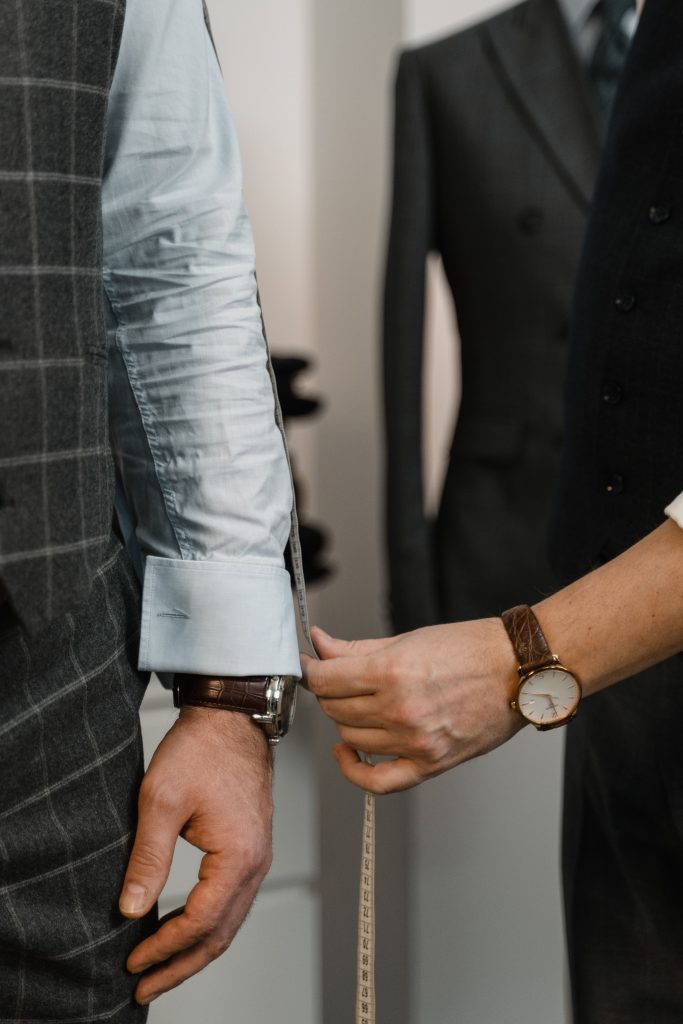
A well-made garment should do more than fit your measurements.
It should fit your life.
The way you stand.
The way you move.
The occasions you attend.
The climate you live in.
The image you want to project.
That is the fundamental difference between buying a standard garment and commissioning custom tailoring.
In Nairobi, custom tailoring has become an increasingly attractive option for professionals, grooms, entrepreneurs, executives and clients who want clothing that feels genuinely personal rather than simply selected from a size chart.
But what actually happens when you have clothes made specifically for you?
From the first consultation to the final fitting, this guide explains the custom tailoring process and what you should expect at every stage.
What Is Custom Tailoring?
Custom tailoring is the process of creating a garment according to an individual client’s measurements, preferences and requirements.
Depending on the service, the process may involve:
- Personal consultation
- Detailed measurements
- Fabric selection
- Design decisions
- Pattern adjustments or drafting
- Cutting
- Construction
- Fittings
- Alterations
- Final finishing
The result is a garment created for a specific person rather than a standard-size customer.
This can include:
- Custom suits
- Wedding suits
- Tuxedos
- Executive suits
- Ladies’ executive wear
- African outfits
- Ankara garments
- Kaunda suits
- Custom jackets
- Trousers
- Formal dresses
The degree of personalisation depends on the tailoring process chosen.
Custom Tailoring vs. Ready-to-Wear
Ready-to-wear clothing is produced in standard sizes.
The garment is created first.
The customer then tries to find the size that comes closest to fitting.
This works reasonably well for some body types.
But standard sizing cannot perfectly account for every individual.
Two people can have the same chest measurement but completely different:
- Shoulder slopes
- Torso lengths
- Posture
- Waist-to-hip proportions
- Arm lengths
- Body shapes
This is why a garment can technically be the correct size and still not fit properly.
Custom tailoring reverses the process.
Instead of asking:
Which existing garment is closest to my body?
The process asks:
What garment should be created for this body?
The First Step: The Consultation
The process begins with conversation.
A good custom tailoring consultation should go beyond simply asking for your measurements.
The tailor should understand:
- What the garment is for
- How often it will be worn
- Where it will be worn
- Your personal style
- Your preferred fit
- Your comfort preferences
- Your colour preferences
- Your lifestyle
A wedding suit requires different decisions from a suit intended for daily boardroom wear.
An executive who travels frequently may need wrinkle-resistant fabric.
A groom may prioritise photography, ceremony formality and comfort through a long wedding day.
A client commissioning a Kaunda suit may want traditional influence combined with a contemporary silhouette.
The consultation is where these decisions begin.
Measurements: More Than Chest and Waist
A professional custom tailoring process requires more than a few basic measurements.
Depending on the garment, measurements may include:
- Chest
- Waist
- Hips
- Shoulder width
- Sleeve length
- Jacket length
- Back length
- Neck
- Armhole
- Trouser waist
- Rise
- Thigh
- Knee
- Trouser length
A good tailor also observes the client.
Posture matters.
Shoulder slope matters.
The way someone naturally stands can affect how a jacket should be constructed.
This is one of the key advantages of custom clothing.
The garment can be designed around the person rather than forcing the person into a standard shape.
Choosing the Right Fabric
Fabric should be selected according to the purpose of the garment.
For Nairobi’s climate, lightweight wool and wool-blends are popular choices for structured suits because they provide:
- Good shape retention
- Professional drape
- Comfort
- Wrinkle resistance
Linen and linen-blends can be particularly suitable for:
- Outdoor weddings
- Daytime events
- Warm-weather occasions
Cotton can work well for:
- Shirts
- Casual tailoring
- Softer structured garments
African fabrics such as Ankara can also be used for:
- Full garments
- Jackets
- Waistcoats
- Accent panels
- Linings
The best fabric is not necessarily the most expensive fabric.
It is the fabric that suits the garment, the occasion and the person wearing it.
Design Decisions
Custom tailoring gives the client greater control over the final design.
For a suit, decisions may include:
- Single-breasted or double-breasted construction
- Lapel style
- Button configuration
- Pocket design
- Trouser style
- Jacket length
- Lining
- Stitching details
- Monogramming
- Vent style
For African formalwear, decisions may include:
- Collar style
- Fabric combinations
- Decorative details
- Silhouette
- Colour
- Contrast panels
The goal is not to add every possible design feature.
The goal is to create a garment where the individual choices work together.
Pattern Cutting and Construction
This is where the design begins to become a garment.
The fabric is cut according to the measurements and design decisions made earlier.
Precision is critical.
A small mistake at the cutting stage can affect:
- Shoulder balance
- Sleeve position
- Jacket proportions
- Trouser fit
- Overall silhouette
Construction methods also influence the final garment.
Depending on the garment and the tailoring house, construction may include different levels of:
- Machine sewing
- Hand finishing
- Structured interfacing
- Canvassing
- Hand-stitched details
The exterior appearance of a garment is important.
But the interior construction also determines how the garment behaves over time.
The Fitting Process
Fittings are where the garment is evaluated on the actual client.
A fitting allows the tailor to assess:
- Shoulder balance
- Jacket length
- Sleeve length
- Waist fit
- Trouser length
- Overall proportion
- Comfort
- Movement
The client should not simply stand still.
A good fitting should consider how the garment behaves when the wearer:
- Sits
- Walks
- Raises their arms
- Moves naturally
For more complex garments, multiple fittings may be necessary.
Each fitting allows the tailor to identify details that cannot always be predicted from measurements alone.
Why Custom Tailoring Takes Time
One of the biggest misunderstandings about custom tailoring is the expectation that it should be completed immediately.
The process involves several stages.
These may include:
- Consultation
- Measurements
- Fabric selection
- Design decisions
- Pattern work
- Cutting
- Construction
- First fitting
- Adjustments
- Final finishing
- Final fitting
The more complex the garment, the more time may be required.
Wedding tailoring should be planned particularly carefully because the final garment needs to be ready before the event, leaving time for any necessary adjustments.
Custom Tailoring for Nairobi’s Professionals
Nairobi’s professional environment creates a wide range of tailoring needs.
A client may need:
- A navy executive suit
- A charcoal boardroom suit
- A wedding tuxedo
- A custom African outfit
- A Kaunda suit
- A tailored blazer
- Ladies’ executive wear
Custom tailoring allows these garments to be created around the actual lifestyle of the wearer.
For example, an executive who spends long hours travelling may prioritise comfort and wrinkle resistance.
A corporate professional may want a wardrobe built around versatile colours.
A public figure may require distinctive formalwear that communicates identity.
A business owner may want a signature style that becomes part of their personal brand.
The garment should serve the life of the wearer.
Custom Tailoring for Weddings
A wedding suit is one of the most common reasons clients commission custom tailoring.
The process allows the groom to control:
- The silhouette
- The fabric
- The colour
- The level of formality
- The fit
- The relationship between the groom’s outfit and the wedding theme
The groom may choose:
- A two-piece suit
- A three-piece suit
- A tuxedo
- A contemporary African formal outfit
The important thing is to begin early.
A bespoke or highly personalised wedding garment should ideally be planned several weeks before the wedding.
Custom African Formalwear
Custom tailoring is not limited to Western-style suits.
The same principles can be applied to African formalwear.
This may include:
- Kaunda suits
- Ankara outfits
- Contemporary African formalwear
- Custom jackets
- African-inspired executive pieces
A client can choose a garment that reflects cultural identity while still receiving the benefit of:
- Individual measurements
- Professional pattern work
- Personalised design
- Multiple fittings
- Quality finishing
This is one of the most exciting areas of modern tailoring in Nairobi.
How Much Does Custom Tailoring Cost in Nairobi?
The price of custom tailoring depends on several factors.
These include:
- Fabric
- Garment type
- Construction method
- Design complexity
- Number of pieces
- Hand-finishing
- Level of personalisation
A simple custom garment will generally cost less than a highly detailed bespoke suit.
At Aspire Africa Clothing, custom tailoring includes a range of garments including:
- Wedding suits and tuxedos from KSh 15,000
- Executive suits from KSh 14,500
- Ladies’ executive wear from KSh 8,500
- African outfits from KSh 7,500
- Kaunda suits from KSh 8,500
The final cost depends on the specific garment and design requirements.
How to Choose a Custom Tailor
Before committing, consider:
1. Do they understand fit?
A tailor should be able to discuss proportion, posture and the way a garment should sit on your body.
2. Is the consultation thorough?
A serious custom process should not feel rushed.
3. Can they explain fabric choices?
The tailor should be able to explain why a fabric suits your occasion and lifestyle.
4. Are fittings included?
The fitting process is essential to achieving a refined final result.
5. Can you see examples of their work?
A portfolio can reveal the quality and range of a tailor’s work.
6. Are timelines realistic?
A professional tailor should be clear about how long the garment will take.
Frequently Asked Questions
How long does custom tailoring take in Nairobi?
The timeline depends on the garment and level of personalisation. Simple pieces may take less time, while bespoke suits and complex formalwear require several weeks for consultation, construction and fittings.
Is custom tailoring better than buying a ready-made suit?
For clients who struggle to find a good fit off the rack, custom tailoring can provide a significantly more personalised result. Whether it is worth the additional cost depends on the garment’s intended use, frequency of wear and personal priorities.
Can I have a suit made for a specific body shape?
Yes. This is one of the primary advantages of custom tailoring. The garment can be designed around individual proportions, posture and measurements.
Can custom tailoring include African fabrics?
Yes. Ankara and other African fabrics can be used for full garments, jackets, linings, accents and contemporary formalwear.
How early should I order a custom wedding suit?
Starting at least eight to twelve weeks before the wedding is advisable for highly personalised or bespoke work, particularly when multiple fittings are required.
Clothing Made for the Person Wearing It
The best custom clothing does not simply look good on a hanger.
It works on the person wearing it.
It moves with them.
It suits their lifestyle.
It reflects their taste.
And it gives them something that standard sizing can never completely provide: the feeling that the garment was created specifically for them.
That is the appeal of custom tailoring.
Aspire Africa Clothing provides custom and bespoke tailoring in Nairobi across wedding suits, tuxedos, executive wear, ladies’ executive wear, African outfits, Ankara wear and Kaunda suits — creating garments around the individual rather than asking the individual to fit into a standard template.