Most people who ask about bespoke tailoring in Nairobi have worn a hundred suits that almost fit. Almost is the word that bespoke tailoring exists to remove.
In short: Bespoke tailoring means a garment is built from a pattern drafted from scratch for your body — not adjusted from an existing template. It involves a detailed consultation, individual measurements, fabric selection, hand-cut pattern work, and multiple fittings before the garment is finished.
It is the highest level of personalisation available in tailoring, and in Nairobi it is increasingly chosen for weddings, executive wardrobes, and formal African wear alike.
Bespoke vs Made-to-Measure vs Off-the-Rack
It’s worth being precise about the word “bespoke,” because it is used loosely in the market.
Off-the-rack: Standard sizing, no individual pattern, minimal alteration.
Made-to-measure: An existing pattern block adjusted to your measurements.
Bespoke: A unique pattern drafted specifically for you, refined through fittings, and often finished with more hand construction.
The practical difference shows up in the fit. Bespoke garments account for your actual posture and proportion rather than approximating them.
The process also takes longer and involves more of your input at every stage.
The Consultation
A bespoke consultation is unhurried by design.
Expect a real conversation about the occasion, your existing wardrobe, your comfort with different silhouettes, and any fit frustrations you have experienced with previous garments.
A good tailor should also ask about your lifestyle — how much you sit, travel, walk or move through a typical day — because those details influence construction decisions later.
Measurements
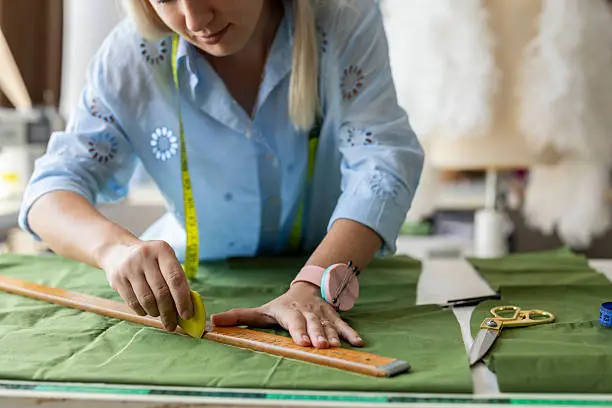
Bespoke measurement sessions are thorough.
Chest, waist, shoulder, sleeve, back length, neck and posture observations all matter.
A tailor who notices that one shoulder sits lower than the other, or that you favour a slight forward lean, is doing the work that justifies the word “bespoke.”
Fabric Selection
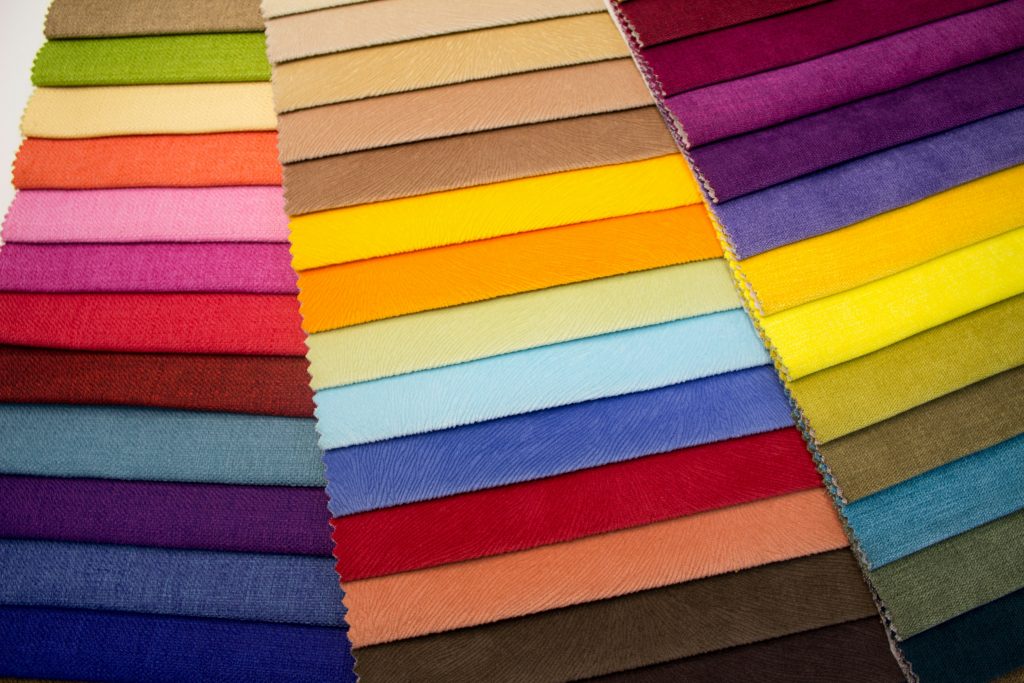
Fabric should be chosen according to the garment’s purpose.
A wedding suit built for an outdoor Nairobi ceremony calls for different fabric considerations from a daily boardroom suit.
Weight, breathability, durability and drape should all be considered before the fabric is selected.
Pattern Cutting
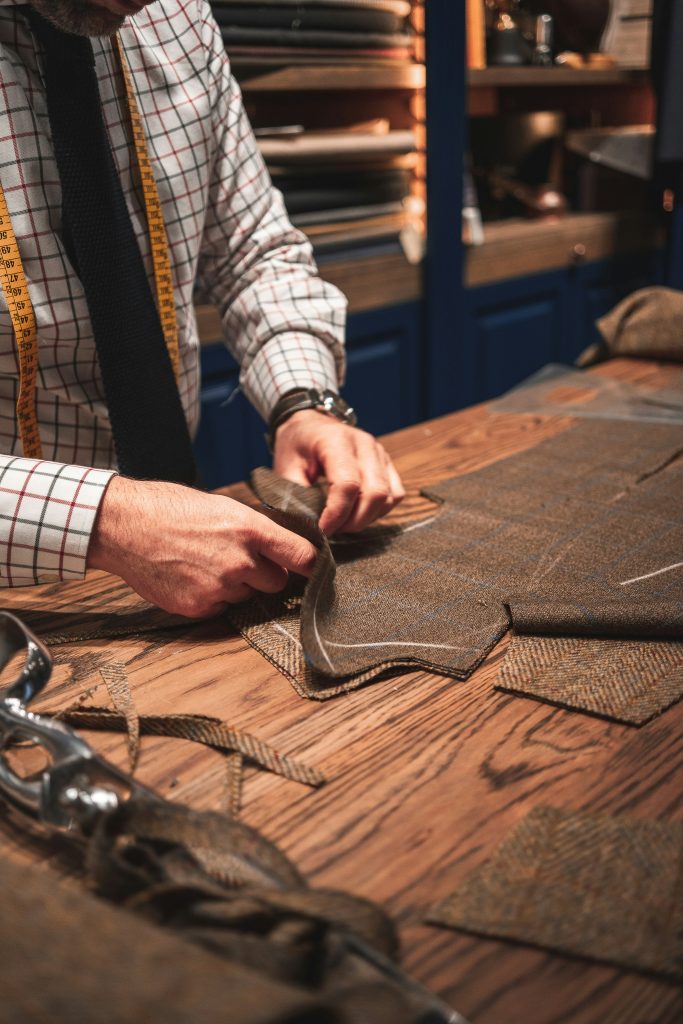
This is the step that makes bespoke, bespoke.
A pattern is drafted specifically from your measurements, posture and proportions. That pattern is unique to you and can be kept on file for future garments.
No other client’s pattern should look exactly like yours.
Fittings
Expect two to three fittings for a full bespoke suit.
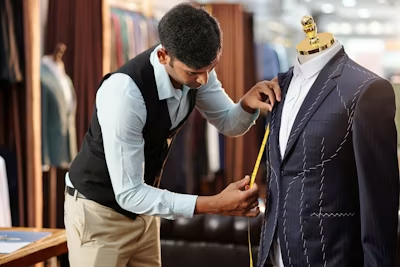
The first is typically a baste fitting — the garment is assembled loosely so the tailor can check balance, shoulder line and overall proportion before final construction.
Subsequent fittings refine sleeve length, waist suppression, trouser break and other details.
Each fitting exists to catch what the last one missed.
Alterations and Final Delivery
Once the final fitting is approved, the garment is finished with buttonholes, lining, pressing and final detailing.
Reasonable post-delivery adjustments, such as a hem or slight waist adjustment, should form part of proper aftercare rather than appearing as an unexpected extra.
What to Look for in a Bespoke Tailor in Nairobi
Six things separate a genuinely bespoke experience from a made-to-measure service using the word “bespoke” as marketing:
Craftsmanship — clean interior construction and carefully finished detailing.
Communication — a tailor who explains why a design choice works for your body.
Fabric quality and range — access to varied fabrics suited to different purposes.
Fit obsession — willingness to schedule another fitting rather than deliver an imperfect garment.
Consultation experience — a process that feels considered rather than rushed.
Attention to detail — thoughtful choices around buttonholes, lining, monogramming and finishing.
Why Nairobi Clients Choose Bespoke
Nairobi’s professional and social calendar gives bespoke tailoring real, recurring purpose.
Weddings call for suits that photograph well and allow movement through a long day.
Corporate roles often demand clothing that communicates confidence before a word is spoken.
Graduations, galas and milestone celebrations create occasions where a garment built specifically for the wearer feels different from something taken from a standard rack.
Frequently Asked Questions
Is bespoke tailoring worth the cost in Nairobi?
For garments worn repeatedly or for significant occasions, such as wedding suits and core executive wardrobe pieces, many clients find that the fit, durability and construction quality justify the investment over time.
How is bespoke different from made-to-measure?
Bespoke uses a pattern drafted from scratch for your body. Made-to-measure adjusts an existing pattern.
How many fittings does a bespoke suit require?
Usually two to three fittings, depending on the garment and the required refinements.
How long does a bespoke garment take to complete?
Generally four to six weeks, depending on design complexity and current workload.
Can bespoke tailoring include African formal wear like Kaunda suits or Ankara pieces?
Yes. The principles of individual pattern drafting and fitting apply to African formal wear just as they do to Western suiting.
Aspire Africa Clothing is a Nairobi-based bespoke tailoring house creating wedding suits, tuxedos, executive suits, ladies’ executive wear, African outfits, Ankara wear and Kaunda suits — each built around the individual client.